
Corporate Social Responsibility Policy ( CSR )
Corporate Social Responsibility Policy
Building a sustainable and inclusive future
Corporate Social Responsibility (CSR) at Jindal Metals & Alloys Limited is deeply rooted in the principles of sustainability and the creation of a balanced, inclusive environment for all. We recognize that a company does not operate in isolation but is part of a larger ecosystem of people, values, institutions, and nature. The true responsibility of business is to responsibly utilize and recycle resources back into society and the environment.
Our CSR philosophy is based on the belief that business decisions must consider not only financial outcomes but also social and environmental impacts. We are committed to responsible growth that aligns with stakeholder expectations and contributes positively to society.
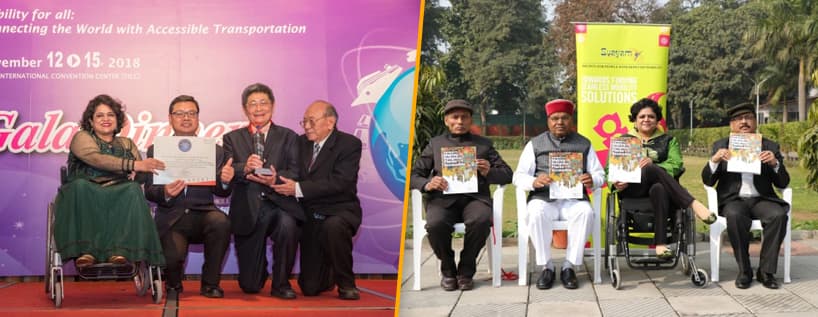
CSR governance is overseen by the Corporate Social Responsibility Committee, which reports directly to the Board of Directors. The company also proudly supports Svayam as its key CSR initiative partner, working toward creating accessible public infrastructure and inclusive environments for persons with disabilities, the elderly, and those with reduced mobility.
Glimpses of our community and accessibility-focused initiatives
CSR philosophy
All CSR initiatives are guided by the core value of inclusion. We ensure that developmental programs reach marginalized groups including children, women, senior citizens, and persons with disabilities. Our focus spans education, healthcare, sanitation, skill development, infrastructure, employment generation, and cultural preservation.
CSR focus areas
1Eradicating hunger, poverty, and malnutrition with focus on vulnerable communities. | 2Promoting preventive healthcare, sanitation, hygiene, and safe drinking water. |
3Supporting inclusive education and special education initiatives. | 4Empowering the girl child and underprivileged through education and infrastructure. |
5Promoting gender equality and supporting vulnerable women groups and self-help initiatives. | 6Establishing homes for women, orphans, senior citizens, and persons with disabilities. |
7Reducing social and economic inequalities through inclusive development programs. | 8Providing skill development, vocational training, and employment support. |
9Supporting education and training in universal design and accessibility. | 10Promoting environmental sustainability, disaster preparedness, and ecological balance. |
11Encouraging carbon footprint reduction and adoption of renewable energy practices. | 12Conservation of natural resources through plantation, rainwater harvesting, and agro-forestry. |
13Animal welfare and support for service animal training programs. | 14Preservation of national heritage, arts, and culture with accessibility for all. |
15Development of inclusive libraries and digital knowledge systems. | 16Promotion of traditional arts, crafts, and handicrafts. |
17Support for armed forces veterans, war widows, and their dependents. |